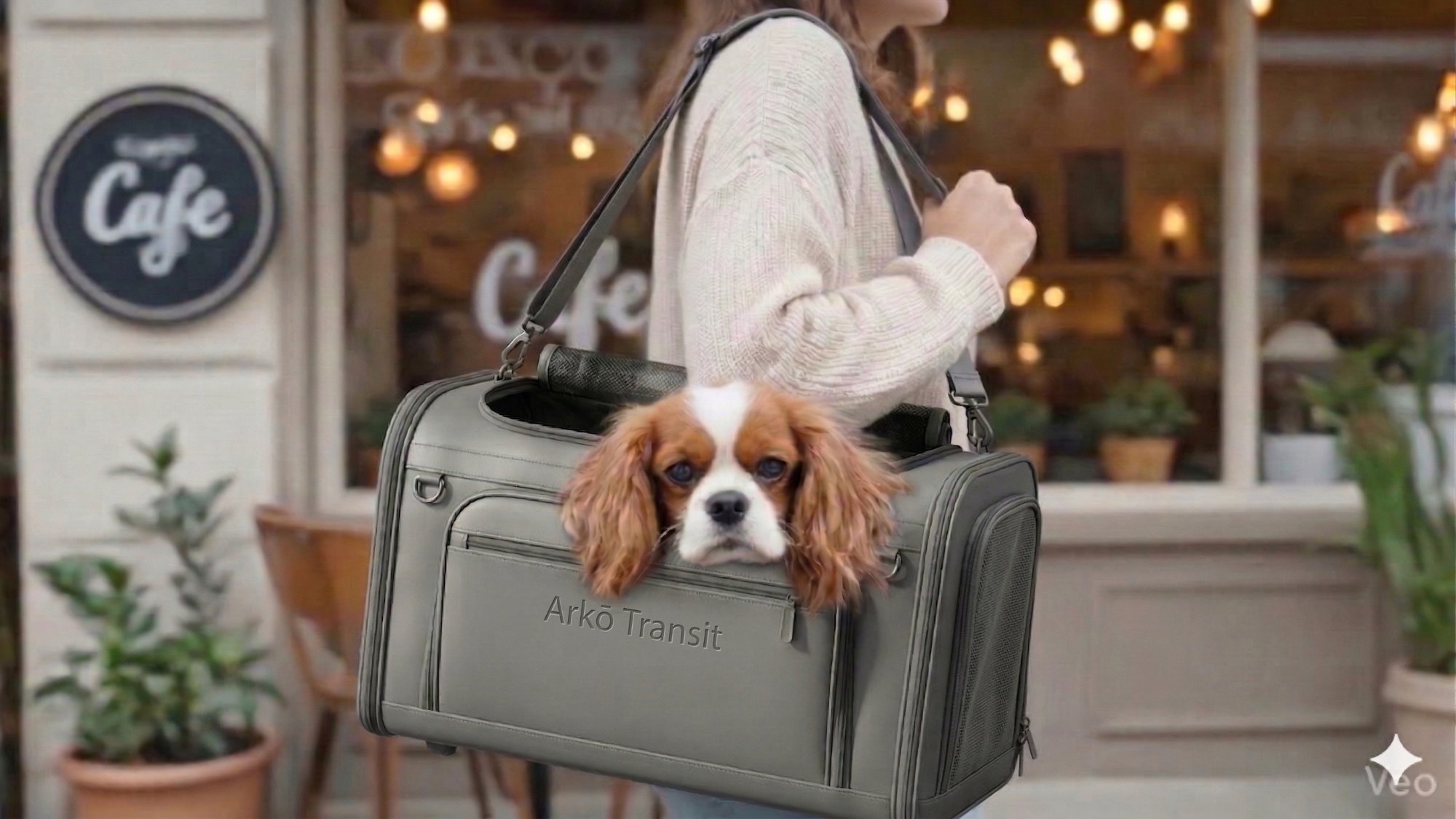
The pet carrier has not meaningfully changed in twenty years. Not because the right materials didn't exist. Not because the hardware wasn't available. Because nobody stopped playing it safe.
Manufacturers made what sold. Retailers stocked what customers asked for. Customers kept buying what they'd always seen — because nobody told them anything better was possible.
The Transit is a specification-led response to that gap. Every component chosen deliberately. Every standard certified by an auditor, not claimed by a brand.
You use a carrier regularly — commuting, cafés, vets, travel. You need something built for that rhythm, not occasional use dressed up as daily.
You want a carrier that looks like something you chose, not something you settled for.
You've replaced a cheap carrier before. You're done doing that.
You want certified materials — not a brand's word that something is sustainable.
You have an anxious pet. No carrier fixes anxiety — but a bad carrier makes it significantly worse.
You'd rather know exactly what's in a product than be reassured by marketing language.
Car journeys, trains, cafés, vets. You need one thing that handles all of it without failing.
You're not looking for the most features. You're looking for the right ones, done properly.
Most carriers address none of them. The Transit was designed against each one specifically. Here is what's happening inside the carrier — and what we did about it.
The Transit uses a PE baseboard over EVA foam. It does not flex under load. The floor your pet steps onto on day one is the floor they step onto two years later.
PE baseboard + EVA foam · no flex under load · permanent rigidity
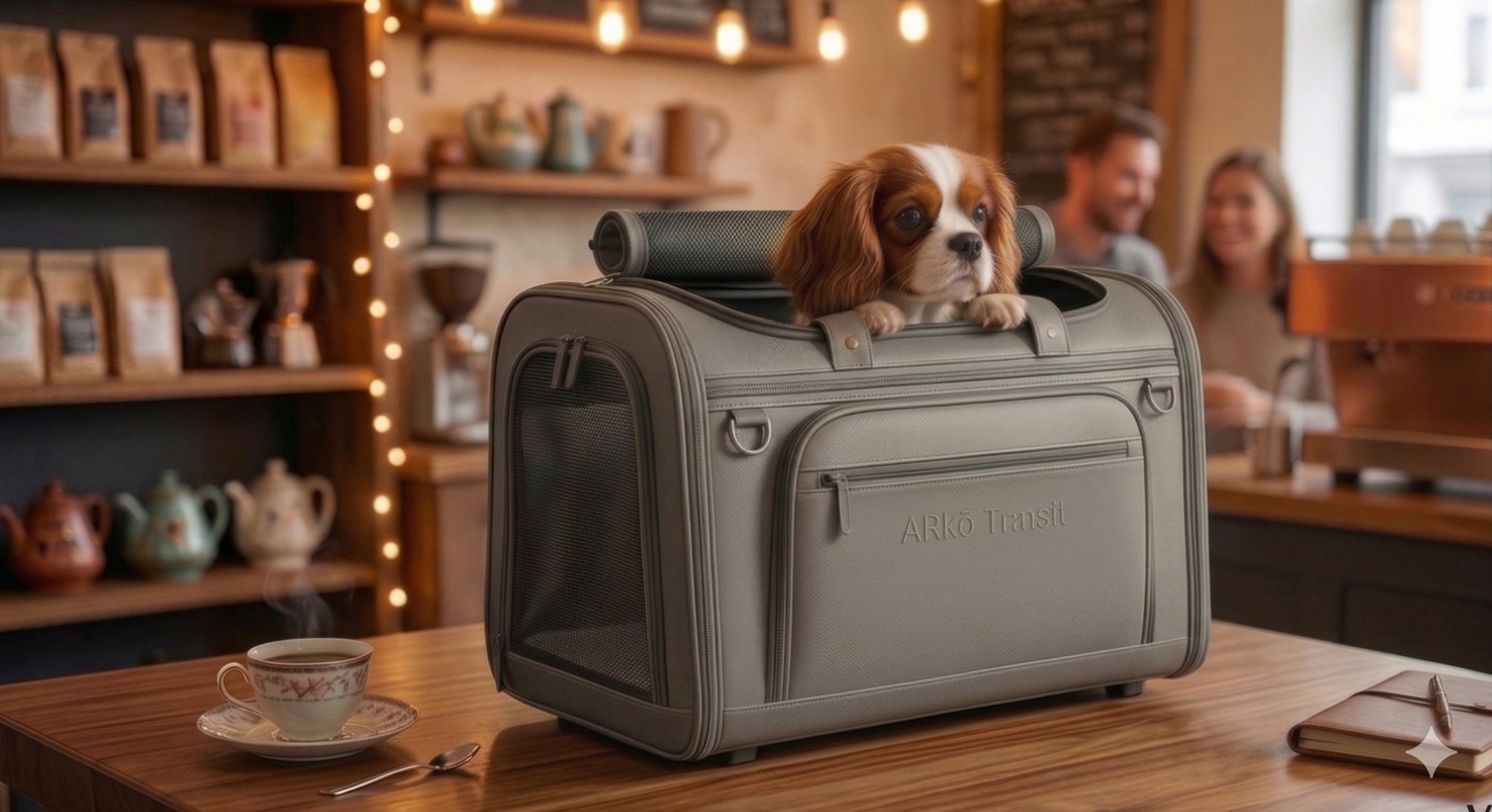
Concept image
The SBS #8 zip uses a closer tooth pitch and a lubricated runner. This isn't about silence — it's about not triggering a predator-response at the two moments of highest anxiety: entry and exit.
SBS #8 · closer tooth pitch · lubricated runner · reduced frequency peak
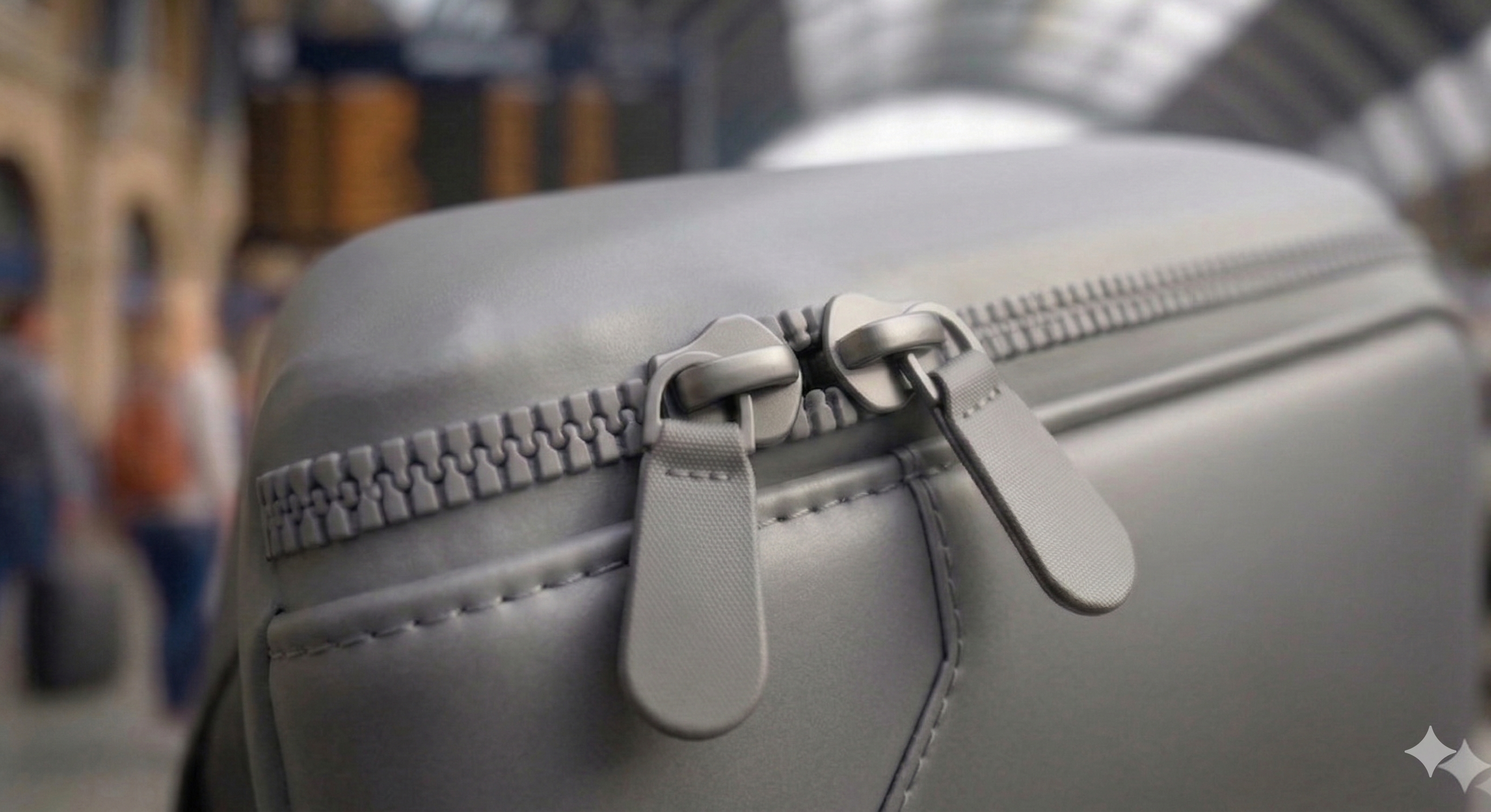
Concept image
The Transit uses a dual-anchor shoulder strap system — two attachment points per end, four total. Pendulum swing is structurally eliminated. Owner comfort and pet welfare are the same engineering problem.
Four anchor points · dual-anchor system · pendulum swing eliminated
Concept image
SBS #8 zips have a heavier gauge slider with mechanical resistance built into the pull. A pet pushing from inside meets genuine resistance — not a zip that gives with sustained pressure.
SBS #8 anti-escape · heavier gauge · mechanical resistance · outdoor luggage spec
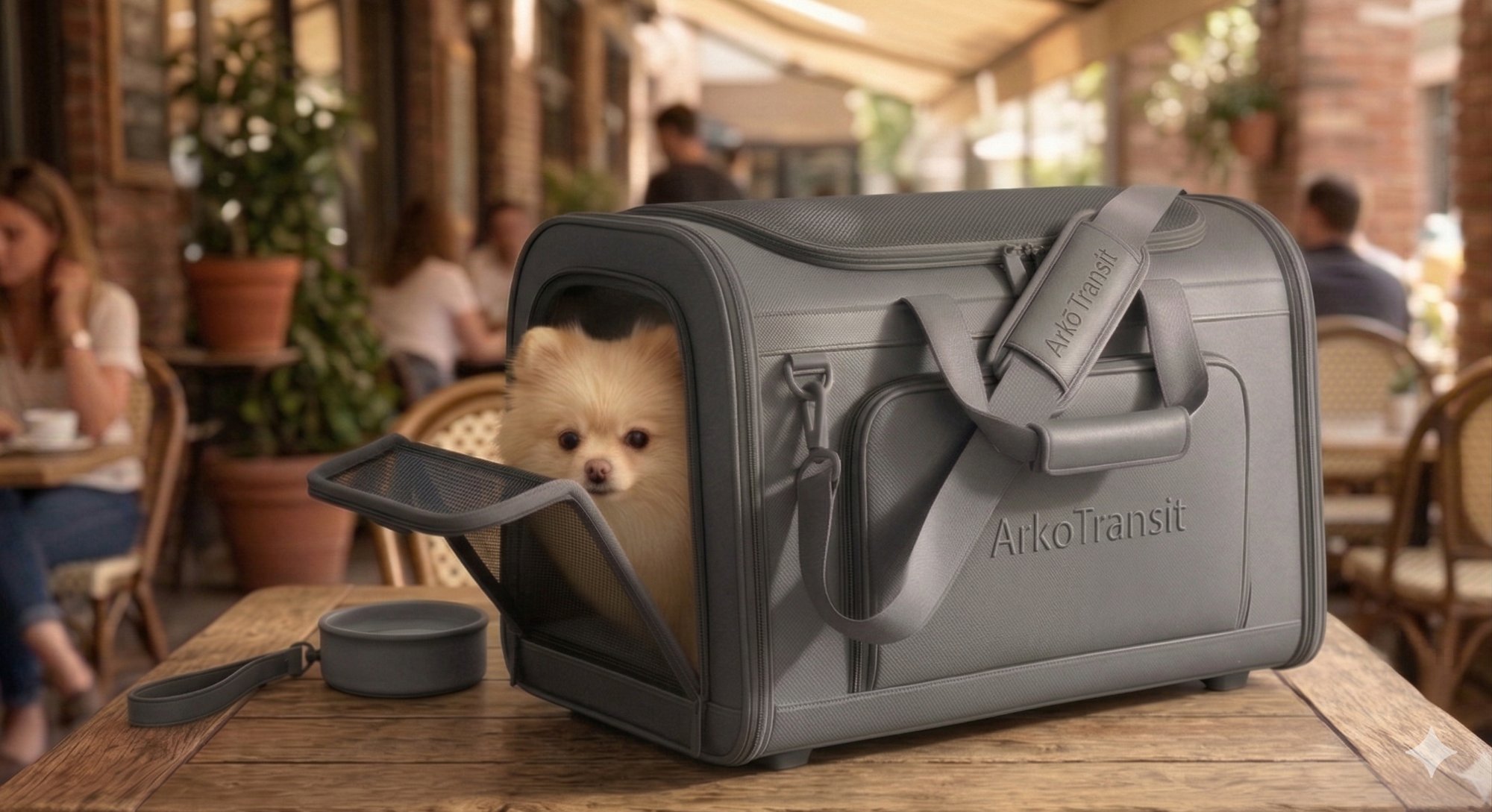
Concept image
The Transit uses tinted mesh that reduces visual stimulus without eliminating light. A removable privacy panel ships with every unit for full enclosure when needed. The tint is a feature, not a limitation.
Tinted mesh · removable privacy panel · visual stimulus management
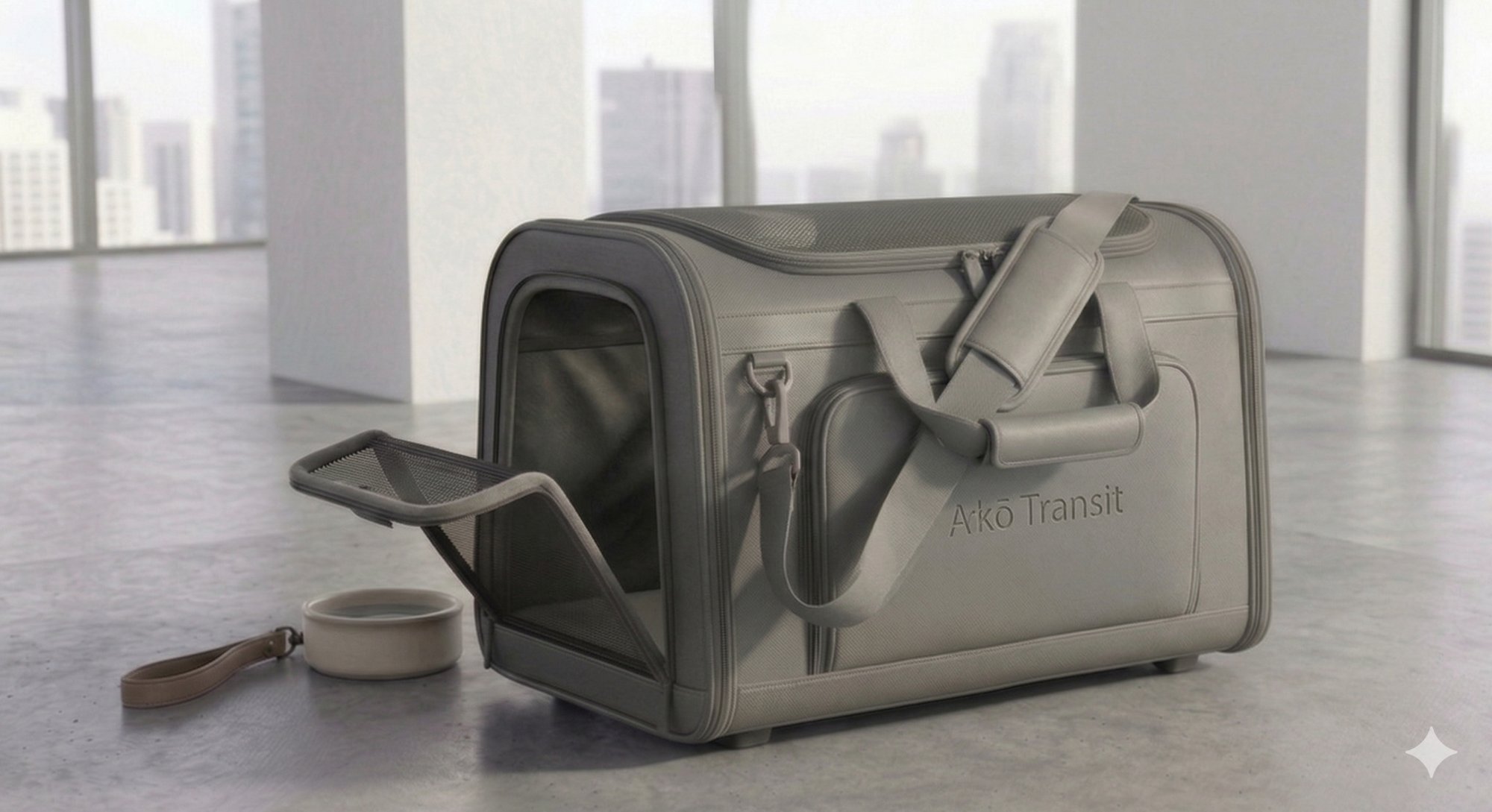
Concept image
The Transit has an integrated seatbelt loop in the rear panel. Thread the belt, click it in — the carrier is anchored. No adapters, no separate purchase, no improvising. Your pet stays in place because the carrier stays in place.
Integrated rear seatbelt loop · no adapters required

Concept image
The EVA foam structural lining in the Transit absorbs sound and maintains panel shape simultaneously. It also provides the "deep pressure" effect that acts as a calming mechanism — particularly relevant for cats, for whom enclosed pressure is a primary stress response.
EVA foam lining · acoustic absorption · deep pressure · panel stability
Concept image
The Transit does not ask you to take our word for it. Every certification is held by an auditing body, not self-declared. The shell, lining, and treatment have defined chains of custody. We've published every standard and named every certifying body. Check them yourself.
OEKO-TEX lining · 900D rPET shell · GRS target · Polygiene treatment
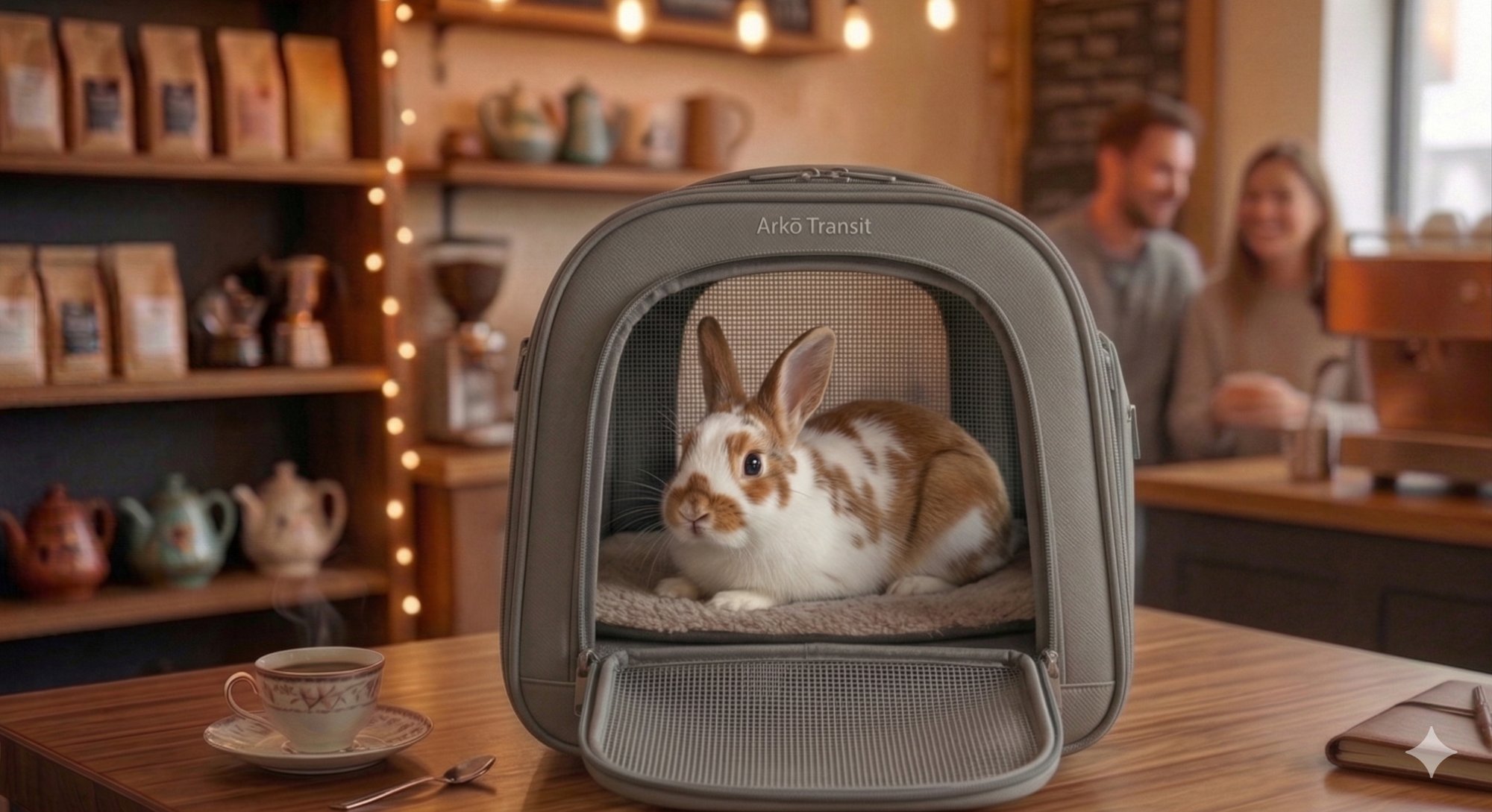
Concept image
The vet on a Tuesday. The train on a Saturday. The café table, the car seat, the back of a taxi. Every journey puts stress on a carrier — and every component either holds or it doesn't. The Transit is specified to hold. Every time, for years.
Standard pet carrier fabric is 600D or less — adequate for occasional use. 900D is the specification used in serious travel luggage. Measurable resistance to abrasion, compression, and impact that a carrier used every week accumulates over time.
SBS #8 is the zip grade used in outdoor and expedition luggage — not pet accessories. When a carrier zip fails, the carrier is finished. The heavier gauge and mechanical slider mean this one is designed not to.
Pressed-metal D-rings deform. Plastic swivel clips crack in cold. The Transit hardware is cast and rated for repeated use — not the components of a carrier that quietly fails after eighteen months.
Most soft carriers use a thin insert that compresses permanently with heat and load. The PE baseboard over EVA foam does not. The floor on day one is the floor two years later.
A carrier used three times a week that needs washing after every trip becomes a burden. Polygiene treatment in the lining prevents odour at source — not because washing is hard, but because your time is worth something.
The baseboard anchors the floor. EVA foam maintains panel shape. SBS zips resist push-through. The seatbelt loop distributes load in the car. An anxious pet tests every seam — the Transit is constructed so none of them give.
These are not claims we wrote. They are standards with auditors, testing protocols, and published criteria. Each certification below is issued or audited by a named independent body — not self-declared.
The lining fabric has been tested against a defined list of harmful substances by an independent testing body and passed. Every certified article has been tested for harmful substances and is therefore harmless in terms of human ecology. Particularly relevant for cats and rabbits, whose respiratory systems are more sensitive to chemical off-gassing than dogs.
Auditing body: OEKO-TEX Association (independent) · Standard: OEKO-TEX Standard 100
The outer shell is made from recycled polyester — not because it is cheaper, but because it performs at 900D and comes with a traceable source. No virgin plastics in the Transit. The "recycled" claim is not marketing — it is documented in the material specification.
Documented in: product specification · Verified through: GRS chain of custody (target)
GRS documents the chain of custody for recycled materials from source to finished product. This is the target certification for the Transit, to be held by the manufacturer. We won't claim it before it is confirmed. When manufacturing terms are finalised, we will update this page with confirmation or explain why it was not achieved.
Standard body: Textile Exchange · Audited by accredited third party · Held by manufacturer, not brand
Polygiene is a silver-salt based antimicrobial treatment that prevents odour at source. It does not wash out. It does not require top-up application. The treatment has been independently assessed for safety — it is not simply listed on a spec sheet by the brand. The OEKO-TEX certified lining and Polygiene treatment work in combination.
Treatment standard: Polygiene AB (independent assessment) · Compatible with OEKO-TEX certification
If you want to verify any of these standards yourself, the certifying body names are there for exactly that reason. We have built the Transit's specification around what can be checked — not what sounds good in a product description. The GRS claim is stated as a target because it is not yet confirmed. That is what honesty looks like.
Feature-heavy mid-range carriers and trusted mainstream staples. Neither category was specified for the owner who won't compromise — on their pet's welfare, their own standards, or the planet.
| Feature | Arkō Transit | Feature-heavy mid-range | Trusted mainstream | Why it matters for your pet |
|---|---|---|---|---|
| Rigid baseboard — no flex under load | ✓ PE + EVA foam | Varies — often thin insert | ✗ Soft base | Floor flex is the #1 anxiety stressor — triggers primal fear of falling, cortisol spike for entire journey |
| Silent zip — reduced frequency | ✓ SBS #8 · closer tooth pitch | ✗ Standard zip | ✗ Standard zip | Cats hear zips at predator frequency (up to 85,000Hz) — startle reflex triggered at entry and exit |
| Anti-escape zip — forced-opening resistance | ✓ SBS #8 · mechanical resistance | ✗ Standard slider | ✗ Standard slider | Standard zip sliders open smoothly under pressure — exactly the wrong property for a determined animal |
| Dual-anchor shoulder strap — 4 points | ✓ Two anchors per end | ✗ Single-point strap | ✗ Single-point strap | Pendulum swing disrupts the vestibular system — direct cause of nausea and drooling during carry |
| EVA foam lining — acoustic absorption | ✓ Full structural lining | ✗ Thin or no padding | ✗ Unpadded | Soft lining absorbs high-frequency sound peaks — the piercing zip shriek becomes a dull thud inside the carrier |
| Tinted mesh + removable privacy panel | ✓ Ships with every unit | ✗ Clear mesh standard | ✗ Clear mesh standard | Busy environments trigger constant threat-assessment — tinted mesh reduces hypervigilance throughout the journey |
| Integrated seatbelt loop | ✓ Rear panel · no adapters | Sometimes — adapter required | ✗ | Unsecured carrier movement in vehicles compounds vestibular disruption and adds unpredictable lateral stress signals |
| Certified lining — OEKO-TEX Standard 100 | ✓ Independently tested | ✗ Uncertified | ✗ Uncertified | Cats and rabbits are sensitive to chemical off-gassing in enclosed spaces — not a theoretical concern |
| rPET shell with chain of custody | ✓ GRS target | Sometimes claimed — rarely verified | ✗ | Recycled polyester at 900D performs as well as virgin — better to document the source than not |
| Antimicrobial lining — Polygiene | ✓ Independently assessed | ✗ | ✗ | A carrier used three times weekly needs to stay fresh without constant washing — this is a daily-use product |
| Duffel-first design language | ✓ | ✗ Pet product aesthetic | ✗ Utility only | Owner confidence affects how the carrier is used — a carrier you're proud to carry is one you use more consistently |
| Cast hardware — D-rings, clips, adjusters | ✓ Rated for repeated use | Pressed metal or plastic | ✗ Pressed metal | Hardware jiggle is the persistent background stressor — keeps cortisol elevated even between major stress events |
Column categories represent typical market segments, not specific named products.
Arkō started with a question I couldn't stop asking: why are these products not better? The answer wasn't a lack of materials or engineering complexity. Nobody had stopped to specify them together and refuse to cut corners to hit a price point that would make a buyer comfortable.
I should be transparent. I have cats — not a dog. I identified this problem commercially and had the capability to do something about it. Distance from a problem sometimes lets you see it more clearly than the person too close to it. If the product is genuinely good, it will stand on its own.
The Transit is the first product. Full specification published. Certifying bodies named. Scrutiny invited. Because that's the only way to mean it when you say no compromises.
Concept image
The 7kg rating and 48cm internal length work for cats and most rabbits. The OEKO-TEX certified lining is specifically relevant here — small animals are more sensitive to chemical off-gassing in enclosed spaces than dogs typically are.
Rabbits in particular have sensitive respiratory systems. A lining tested by an independent body against harmful substances matters more for them, not less. The Transit was designed for every animal that deserves a carrier built to a real standard.
The most common question before buying. Here is the straightforward answer for the breeds and species most likely to use the Transit.
Internal dimensions: 48cm length · 24cm width · 28cm height · Rated comfort load: 7kg
| Breed / Species | Typical weight | Typical body length | Fit verdict | Notes |
|---|---|---|---|---|
Cavalier King Charles Spaniel Dog |
5–8kg | 30–35cm | ✓ Ideal | The carrier was sized with this breed in mind. Compact, within weight, comfortable. |
French Bulldog Dog |
8–14kg | 28–33cm | ⚠ Check weight | Body length fits. Most French Bulldogs exceed 7kg — weigh your dog. Under 7kg: fine. Over: not suitable. |
Miniature Dachshund Dog |
3–5kg | 30–38cm | ✓ Fits | Long body but within the 48cm length. Weight well within range. Comfortable fit. |
Pug Dog |
6–9kg | 25–30cm | ⚠ Check weight | Compact enough on length. Pugs at the heavier end of the breed range exceed 7kg — weigh first. |
Shih Tzu Dog |
4–7.5kg | 26–30cm | ✓ Fits | Generally within weight and length. Heavier individuals (7–7.5kg) will fit physically but space is tighter. |
Miniature Schnauzer Dog |
5–8kg | 30–36cm | ✓ Fits | Fits well under 7kg. Heavier individuals at the top of the breed range: check weight before purchasing. |
Maltese Dog |
2–4kg | 20–25cm | ✓ Ideal | Small, light, compact. Excellent fit — significant space to move. |
Chihuahua Dog |
1.5–3kg | 15–23cm | ✓ Ideal | Well within weight and dimensions. May benefit from a folded blanket for additional security in the space. |
Pomeranian Dog |
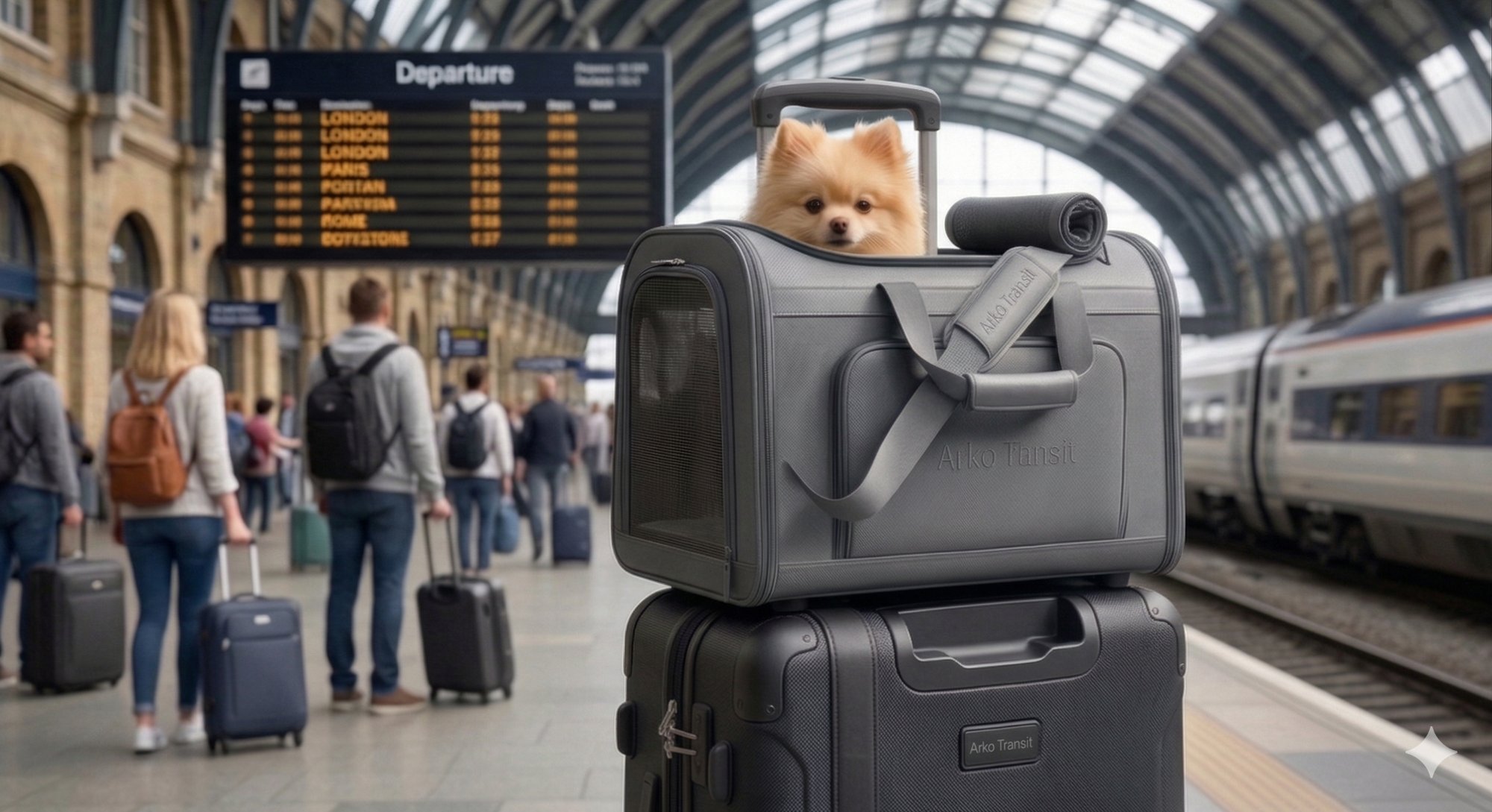
2–3.5kg | 18–22cm | ✓ Ideal | Ideal size and weight. This is the breed shown in the carrier imagery on this page. |
Bichon Frisé Dog |
3–5kg | 23–28cm | ✓ Ideal | Comfortably within weight and length. Excellent fit. |
Domestic cat — average Cat |
3.5–5kg | 28–38cm (body) | ✓ Ideal | Most domestic cats are well within dimensions. Larger breeds (Maine Coon, Ragdoll) typically exceed 7kg — check weight. |
British Shorthair Cat |
4–8kg | 30–35cm | ⚠ Check weight | Body length fine. British Shorthairs are a stocky breed — males often reach 7–8kg. Weigh your cat. |
Rabbit — medium breed Rabbit |
2–4kg | 35–45cm | ✓ Fits | Weight well within range. Body length of larger individuals approaches 48cm — factor in a relaxed position. The OEKO-TEX lining is particularly relevant for rabbits. |
Rabbit — giant breed (Flemish etc.) Rabbit |
5–10kg+ | 50–65cm | ✗ Not suitable | Giant breeds exceed both weight rating and internal length. Not the right carrier for these animals. |
If there's something not covered here, the waitlist form has a free-text field. We'd rather know what's stopping you than lose you to an unanswered question.
That's intentional. The tinted mesh reduces visual stimulus — which reduces reactivity in anxious pets, particularly in busy environments. Constant visual input means constant threat-assessment, which keeps stress hormones elevated throughout the journey. A removable privacy panel also ships with every unit for full enclosure when needed. The tint is a feature, not a limitation.
7kg is the rated comfort load — meaning adequate space and structural stability at that weight. A pet at exactly 7kg will fit. A pet at 7.5kg will also fit physically, but may find the space tighter. If your pet is 7kg and compact in build, this is the carrier. If they're 7kg and long in leg, consider whether 48cm internal length is enough. The breed fit chart above gives specific guidance for common breeds.
Honestly: the Transit is designed for everyday use, not as a dedicated airline carrier. The 28cm height dimension may exceed under-seat requirements on some airlines. We haven't positioned this as an airline product and we won't claim airline compliance we can't verify per-airline. If you need an airline-specific carrier, check your airline's exact dimensions before purchasing this or anything else.
Two £60 carriers over four years — replacement because the zip failed, the base softened, or you just stopped trusting it — is £120, plus the time and stress of replacing it. £149 for a carrier specified to last is the cheaper outcome. But the honest version: if the spec doesn't justify the price to you, it shouldn't. We've published exactly what's in it so you can make that call yourself.
We won't claim this fixes anxiety — that's not how anxiety works. What the Transit removes: zip noise at entry and exit, floor instability during movement, pendulum swing during carry, visual overstimulation in busy environments, and acoustic amplification inside the carrier. Whether those are your pet's specific triggers, only you know. We've designed against all five of the major carrier-specific stressors. The rest is between you, your pet, and time spent acclimatising.
OEKO-TEX certification is issued by an independent testing body — the lining has been tested against a defined list of harmful substances and passed. GRS certification is the target standard, to be held by the manufacturer — we'll confirm when manufacturing terms are finalised and not before. Neither is self-declared. Both are auditable. The certifications chart above names every auditing body so you can verify them yourself.
Yes. The 7kg rating and dimensions work for cats and most rabbits — see the fit guide above for specifics. The OEKO-TEX certified lining is specifically relevant for animals more sensitive to chemical off-gassing. Rabbits have particularly sensitive respiratory systems — certified materials matter more, not less, for them. The Transit was designed for dogs, cats, and rabbits equally.
First production run is 250 units, targeted for 2026. Joining the waitlist is not a commitment — no payment, no obligation. You'll hear first when units are available, and the full story of how it got there. If it's not for you at that point, you walk away with nothing lost.
First production run is 250 units. No commitment, no payment. Just first access when the Transit is ready — and the full story of how it was built.
Join the Waitlist